Energy recharge / ATP support
Helps restore membrane potential and cellular energy production, supporting the bioenergetic mechanisms underlying metabolism.

Regenesis technology combines biophysics, solid-state electromagnetism and biochemistry. By regulating the impedance between molecules involved in redox activities, it enhances the exchange of electrical charges underlying all cellular activities.
In essence, by regulating the impedance between two molecules involved in redox activities, the exchange of electrical charges is enhanced. This favors most biochemical and physiological activities both at the cellular level and in the extracellular matrix, thus improving the body's mechanisms and promoting lasting well-being.
Regenesis devices emit very low-intensity electromagnetic signals that modulate the impedance between molecules: the electron exchange becomes efficient again and the cell recovers its membrane potential, restoring its natural self-repair capabilities.
Helps restore membrane potential and cellular energy production, supporting the bioenergetic mechanisms underlying metabolism.
Promotes the elimination of excess free radicals, countering oxidative stress and supporting the body's antioxidant defenses.
Supports tissue oxygenation and the reduction of low-grade basal inflammation, promoting better tissue perfusion.
Does not hinder tissue regeneration: the body can focus its energy on self-repair processes.
H.I.T. (Holographic Information Transfer) combines informational biophysics, nanotechnology, solid-state electronics and biochemistry to modulate physiological processes in a natural and non-invasive way.
The technology allows, through the acquisition of the slight electromagnetic activities of biologically active molecules (such as active pharmaceutical ingredients or endogenous molecules like glutathione), to induce a stabilized spatial orientation on the electrical charges, consistent with the electromagnetic activity of the molecule of interest. When a device is excited or powered, all the electromagnetic expressions produced become the new vector of the biological and metabolic effects of the initial molecule, without using its chemical component anymore.
The technology is capable of inducing specific electromagnetic signals that selectively oxidize and/or reduce target molecules. This leads to an increase or decrease in impedance within the chemical structure, resulting in the inhibition or expression of the molecule's activity. The result is a fine modulation of the biological pathways involved in redox processes.
The technology emphasizes the energetic expression of the active ingredient molecules. It is possible to introduce very small doses of an active ingredient into the biological system so that it does not show pharmacological effects; these molecules, when selectively stimulated by Regenesis devices, show their biological activity without the side effects typically associated with a standard dose of the unenhanced ingredient.
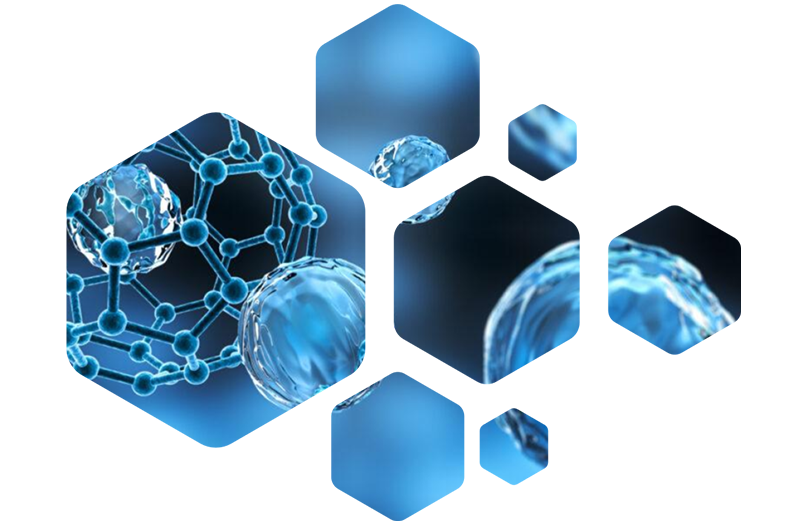
The technology is able to modulate the configurations of electrical charges within molecules of interest (for example, glucose, lactose, gluten or active ingredient molecules). This modulation amplifies the expression and efficiency of the molecules' intrinsic activities. It is also possible to induce, through the same molecules, specific effects of different chemical structures.
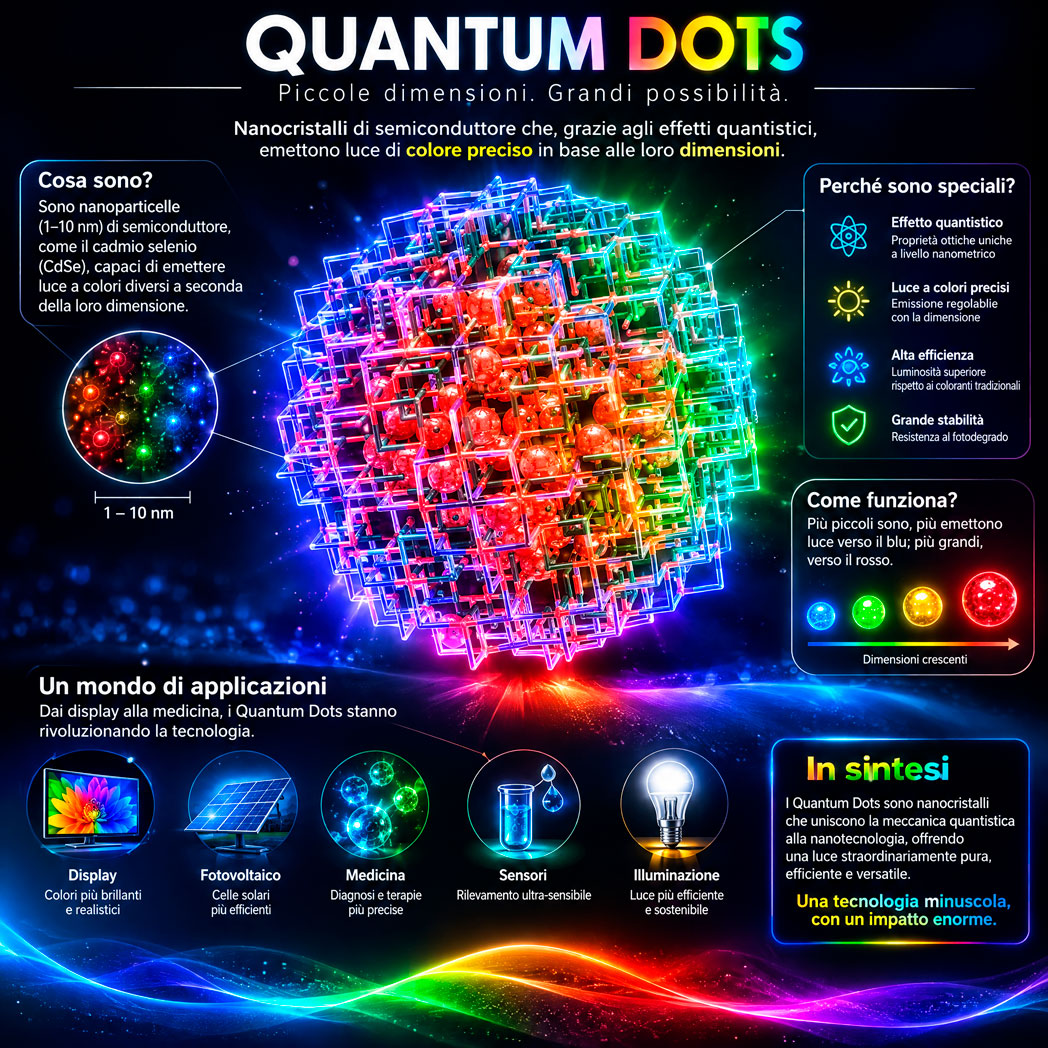
Quantum dots are semiconductor nanocrystals on the order of a few nanometers. At this scale, matter behaves according to the laws of quantum mechanics: the properties of materials no longer depend only on chemical composition, but on the size of the nanocrystal itself.
In 2023, the Nobel Prize in Chemistry was awarded to the pioneers of this technology, confirming the scientific relevance of quantum dots in medicine and materials science.
Regenesis integrates quantum dots into its H.I.T. technology to amplify the interaction between electromagnetic signals and cellular redox processes, bringing device effectiveness to an unprecedented level.
The validity of Regenesis technology is supported by collaborations with major universities and international research centers, confirming the company's commitment to biophysical research applied to human well-being.
Sapienza University of Rome
University of Rome Tor Vergata
Istituto Dermopatico dell'Immacolata
I.EM.E.S.T. of Palermo
Bambino Gesù Pediatric Hospital
University of Cagliari and Sassari
University of Yerevan
People's University of Friendship of Moscow